Roofing Work: Repairs, Replacement & How to Get Competitive Quotes
Your roof is one of the most critical parts of your property — protecting everything beneath it from weather, damp, and structural damage. But roofing work is expensive, often urgent, and the market is full of rogue traders who overcharge, use poor materials, or disappear halfway through the job.
Whether you need a few slipped tiles fixed, a full re-roof, or a flat roof replacement, knowing what to expect in terms of cost, timescales, and what to look for in a roofer is essential. This guide explains roofing costs by project type, qualifications and insurance to check, common roofing problems, and how platforms like GetFixt can connect you with verified roofers quickly.
How much does roofing work cost?
Minor repairs
- Replace a few slipped tiles: £150-£400
- Fix a small leak: £200-£500
- Replace ridge tiles: £300-£800
- Repoint chimney stack: £400-£1,200
Re-roofing (pitched roof)
- Terraced house (40-60m²): £4,000-£7,000
- Semi-detached house (60-80m²): £5,500-£9,000
- Detached house (100m²+): £8,000-£15,000+
Flat roof replacement
- Small extension or garage (10-20m²): £1,000-£3,000
- Medium flat roof (30-50m²): £3,000-£6,000
- Large flat roof (100m²+): £8,000-£15,000
- Scaffolding hire: £800-£1,500 (2-3 weeks)
- Skip hire (waste removal): £200-£400
- London and South East: Add 20-30% to these prices
Need a quote? Photograph your equipment.
GetFixt identifies any piece of building equipment from a photo and connects you with verified tradespeople - free to use.
What qualifications and insurance should a roofer have?
- Public liability insurance (minimum £5 million) — covers damage to your property or neighbouring properties
- Employer's liability insurance (if they have employees)
- City & Guilds NVQ Level 2 or 3 in Roof Slating and Tiling
- NFRC (National Federation of Roofing Contractors) membership
- CompetentRoofer scheme registration
- Trustmark or FMB (Federation of Master Builders) membership
- Manufacturer guarantees — Marley, Redland offer extended guarantees for approved contractors
- Portfolio and references — photos of completed projects and testimonials
Pitched roof vs flat roof: what's the difference?
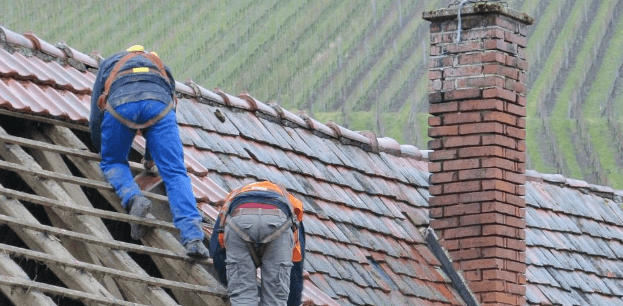
Pitched roofs (sloped) are traditional tiled or slated roofs with a slope (typically 15-50 degrees). Water runs off naturally. They last 50-100 years for slate, 30-60 years for tiles, are low maintenance, and better for loft conversions — but more expensive to install, require scaffolding, and more complex to repair. Materials: clay tiles, concrete tiles, natural slate, synthetic slate.
Flat roofs (low-slope) are common on extensions, garages, and commercial buildings. Cheaper to install and easier to access, but shorter lifespan (10-30 years depending on material) and more prone to leaks. Materials: EPDM rubber membrane, GRP fibreglass, felt (traditional or torch-on), liquid waterproofing.
How long does a roof last?
- Natural slate: 80-100+ years
- Clay tiles: 50-100 years
- Concrete tiles: 30-60 years
- EPDM rubber (flat roof): 20-30 years
- GRP fibreglass (flat roof): 20-30 years
- Felt roofing (traditional): 10-20 years
When should you repair vs replace a roof?
Repair if:
- Damage is localised (a few slipped tiles, small leak)
- Roof is less than 20 years old
- Underlying structure (battens, felt) is in good condition
- Cost-effective (repair costs under 20% of replacement cost)
Replace if:
- Roof is over 30 years old and showing multiple issues
- Widespread damage (many broken tiles, sagging, major leaks)
- Felt or battens are rotten
- You're planning a loft conversion (upgrading insulation and ventilation at the same time)
A reputable roofer will advise honestly — they won't push for a full replacement if a repair will do.
Common roofing problems and how to avoid them
- Leaks and water ingress: slipped tiles, damaged flashing, cracked valleys, perished flat roof membrane — fix minor damage promptly before it worsens
- Moss and algae growth: clean gutters regularly, treat moss with biocide wash, ensure good ventilation
- Sagging roof: rotten timber battens or rafters — structural survey required, Building Control sign-off if structural work needed
- Flat roof ponding (standing water): ensure flat roofs have minimum 1:80 fall, use appropriate membrane
- Poor ventilation causing condensation: install roof vents, ensure insulation doesn't block airflow
How to avoid cowboy roofers
Roofing attracts rogue traders because it's unregulated, customers often pay large deposits upfront, and poor workmanship may not be obvious until the next heavy rain.
- ❌ Knocks on your door offering to 'finish leftover materials from another job'
- ❌ Demands large upfront payment (more than 20% is a warning sign)
- ❌ No written quote or contract
- ❌ Can't provide insurance proof
- ❌ Quotes significantly lower than everyone else
- ❌ Only accepts cash
- ❌ Pressures you to decide immediately
- ✅ Get 3 written quotes from different roofers
- ✅ Check reviews online (Google, Checkatrade, Trustpilot)
- ✅ Verify insurance before work starts
- ✅ Ask for references and contact previous clients
- ✅ Never pay more than 10-20% upfront
- ✅ Use verified platforms like GetFixt where roofers are checked before joining
How GetFixt connects you with verified roofers
Finding a reliable roofer usually means phone calls, vague quotes, waiting for site visits, and chasing responses. GetFixt removes that friction. You upload photos of your roof — the damage, the roof type, measurements if you have them. The app shares these with verified roofers covering your area. They can assess the work before responding, which means more accurate quotes without wasted site visits.
Most GetFixt users receive competitive roofing quotes within a few hours. GetFixt is free to use for homeowners, landlords, and property managers. It covers 35+ trade categories beyond roofing — electricians, plumbers, builders, landscapers, and more.
Need a quote? Photograph your equipment.
GetFixt identifies any piece of building equipment from a photo and connects you with verified tradespeople - free to use.
About the author
GetFixt Team
GetFixt was built by trade professionals who understand the frustration of slow quotes and miscommunication. The app uses AI-powered equipment identification to connect property owners with verified tradespeople across 35+ categories - from electrical and gas to HVAC, solar, and fire safety.
Free to use
Ready? Take your first photo.
Photograph your equipment and get quotes from verified tradespeople near you - in hours, not days.