Solar Panel Installation: Cost, Savings & How to Find Installers
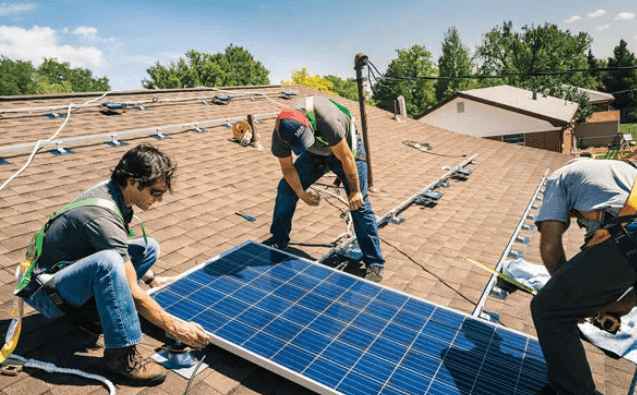
Solar panel installations in the UK have surged in recent years, driven by rising energy costs, improved technology, and better financing options. A typical domestic solar system can cut electricity bills by 40-70% and pay for itself in 8-12 years — after which you're generating free electricity for decades.
But solar installations are a significant investment, and the market is full of mis-selling, overpriced quotes, and poor-quality installations. So how much should you actually pay? What size system do you need? And how do you find a trustworthy installer who won't disappear when something goes wrong? This guide explains solar panel costs, savings, system sizing, qualifications to look for, and how platforms like GetFixt can connect you with MCS-certified installers quickly.
How much does solar panel installation cost?
Solar costs have fallen dramatically over the past decade. Here are typical prices for 2026:
- 3kW system (10-12 panels): £5,000-£7,000
- 4kW system (13-16 panels): £6,000-£8,500
- 5kW system (16-20 panels): £7,500-£10,000
- 6kW+ system (20+ panels): £9,000-£12,000+
- Battery storage (5-10kWh): add £3,000-£7,000
- Scaffolding (if needed): add £500-£1,200
- London and South East: Add 10-20% to these prices
Prices include solar panels, inverter, mounting system, DC and AC cabling, installation labour, MCS certification, and building regulations sign-off. Scaffolding, battery storage, and electrical upgrades are usually additional.
How much money can you save with solar panels?
Savings depend on system size, your electricity usage, how much you use during daylight hours, whether you have battery storage, and export tariff rates (Smart Export Guarantee).
Example: 4kW system on a typical UK home
- Annual generation: ~3,400 kWh
- Self-consumption (without battery): 40-50% (~1,500 kWh)
- Electricity not bought from grid: 1,500 kWh × £0.24/kWh = £360/year
- Export payments: 1,900 kWh × £0.15/kWh = £285/year
- Total annual saving: ~£645
- With 5kWh battery: annual saving rises to £750-£900
- Payback period without battery: 9-12 years
- Solar panels last 25-30 years — free electricity after payback
Need a quote? Photograph your equipment.
GetFixt identifies any piece of building equipment from a photo and connects you with verified tradespeople - free to use.
What size solar system do you need?
- Low usage (2,000-2,500 kWh/year): 3kW system
- Average usage (3,000-4,000 kWh/year): 4-5kW system
- High usage (5,000+ kWh/year or heat pump): 6kW+ system
- 1kW requires ~6m² of roof space
- South-facing roofs: best (100% generation potential)
- East or west-facing: 85-90% generation potential (still viable)
- North-facing: not recommended in the UK
Your installer should carry out a roof survey and shading analysis before quoting. Trees, chimneys, or neighbouring buildings casting shadows can significantly reduce output.
What qualifications should a solar installer have?
- MCS certification (Microgeneration Certification Scheme) — essential to claim Smart Export Guarantee payments
- Electrical qualifications — 18th Edition, NVQ Level 3 in Electrical Installation
- NICEIC or NAPIT registration — for electrical work compliance
- Manufacturer accreditation — most panel and inverter manufacturers require installer training
- Public liability insurance (minimum £5 million)
- Professional indemnity insurance (covers design errors)
- Insurance-backed warranty — protects you if the installer goes out of business
MCS certification is non-negotiable. Without it, you cannot claim Smart Export Guarantee payments, your system may not comply with building regulations, and warranty claims may be rejected.
Solar panels, inverters, and batteries: what to choose
Solar panels
- Monocrystalline (most common): high efficiency (18-22%), black appearance, premium cost
- Top brands: Longi, JA Solar, Trina, Canadian Solar, REC, SunPower
- Look for: 25-year performance warranty, efficiency 18%+, Tier 1 manufacturer
Inverters
- String inverter (most common): one inverter for the whole system (~£800-£1,500)
- Microinverters: one inverter per panel — better for shaded roofs (~£150 per panel)
- Hybrid inverter: works with batteries (~£1,500-£3,000)
- Top brands: SolarEdge, Enphase, GivEnergy, SMA, Fronius
- Look for: 10-year warranty minimum, efficiency 95%+, remote monitoring app
Batteries (optional)
- 5kWh battery: £3,000-£4,500
- 10kWh battery: £5,000-£7,000
- Top brands: Tesla Powerwall, GivEnergy, Solax, LG Chem, BYD
- Increases self-consumption from ~40% to ~70-80%
Smart Export Guarantee (SEG): getting paid for excess electricity
When your solar panels generate more electricity than you use, the excess is exported to the grid. Under the Smart Export Guarantee, energy suppliers must pay you for this electricity. SEG rates in 2026 range from £0.05-£0.15 per kWh fixed rate, with time-of-use tariffs potentially higher during peak demand. Typical annual SEG income: £150-£300. To claim SEG payments, your system must be MCS-certified, you need a smart meter, and you sign up with a SEG-licensed supplier.
How to avoid solar panel scams
- ❌ Avoid door-to-door salespeople (legitimate installers rarely cold-call)
- ❌ Don't believe 'free solar' or 'government-funded' claims (these schemes ended in 2019)
- ❌ Don't sign same-day contracts
- ❌ Avoid installers who can't show MCS certification
- ✅ Get 3 written quotes from MCS-certified installers
- ✅ Check reviews on Trustpilot, Google, Checkatrade
- ✅ Verify MCS certification on the MCS database
- ✅ Ask for insurance-backed warranty
- ✅ Use verified platforms like GetFixt where installers are pre-checked
How GetFixt connects you with MCS-certified solar installers
Finding trustworthy solar installers usually means wading through high-pressure sales calls, inflated quotes, and confusing technical jargon. GetFixt removes that friction. You upload details of your property — roof photos, electricity usage, location. The app shares these with MCS-certified solar installers covering your area. They can assess feasibility and provide accurate quotes without wasting time on unsuitable properties.
Most GetFixt users receive competitive solar quotes within a few hours. GetFixt is free to use for homeowners and property managers. It covers 35+ trade categories beyond solar — electricians, HVAC, heat pumps, fire safety, and more.
Need a quote? Photograph your equipment.
GetFixt identifies any piece of building equipment from a photo and connects you with verified tradespeople - free to use.
About the author
GetFixt Team
GetFixt was built by trade professionals who understand the frustration of slow quotes and miscommunication. The app uses AI-powered equipment identification to connect property owners with verified tradespeople across 35+ categories - from electrical and gas to HVAC, solar, and fire safety.
Free to use
Ready? Take your first photo.
Photograph your equipment and get quotes from verified tradespeople near you - in hours, not days.